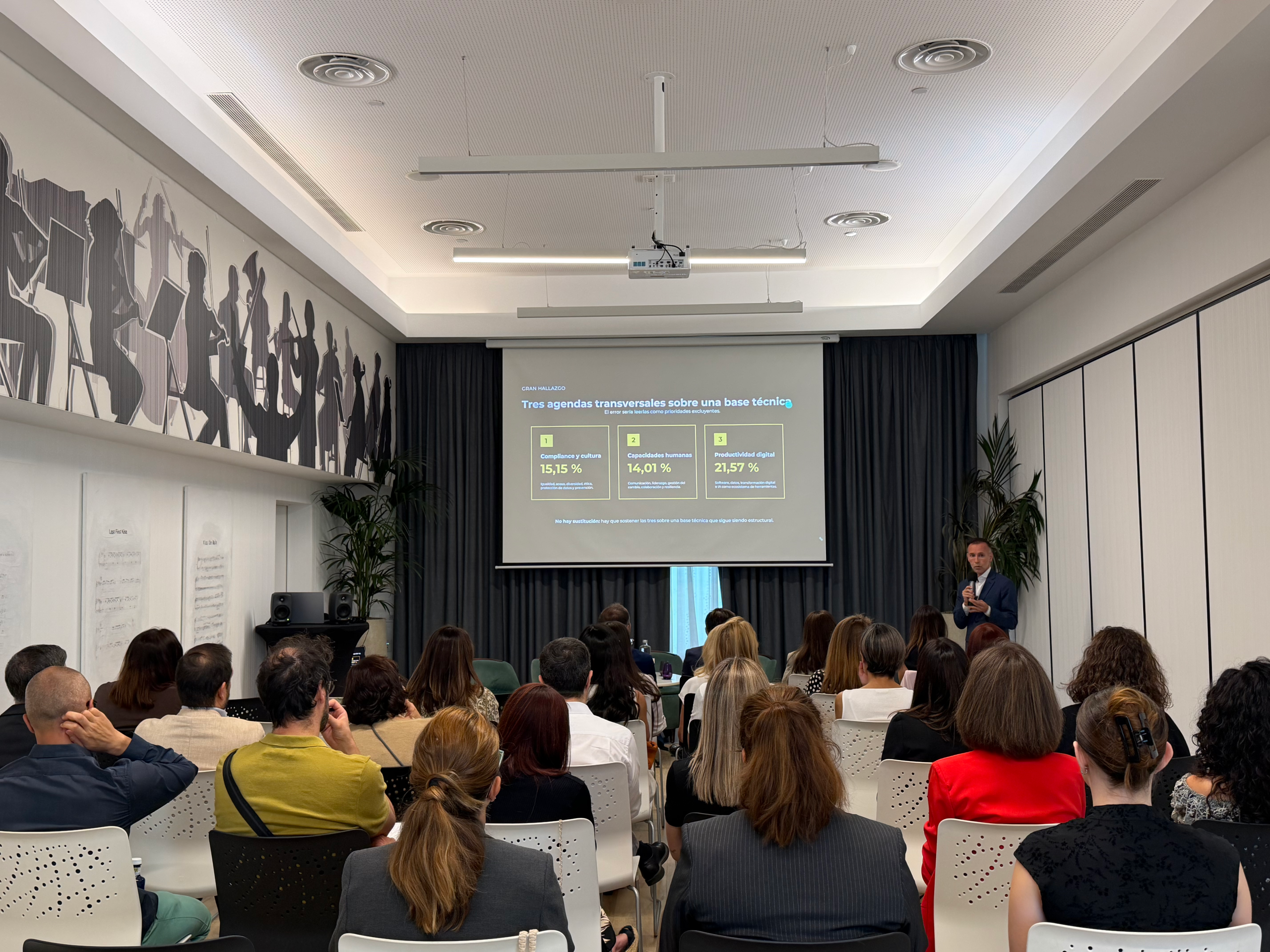

The Education 4.0 It is no longer a future trend: it is a reality that is taking shape in Spanish public schools. The School Code 4.0 Program It is an initiative of the Ministry of Education, Vocational Training, and Sports that places programming, robotics, and computational thinking at the core of learning from the earliest stages of education. Its goal is to prepare today’s generations for a job market in which digital skills are not optional, but essential.
As part of the Plan for Digitization and Digital Skills in the Education System (Plan #DigEDu and Plan #CompDigEDu), this territorial cooperation program involves the Ministry, all the Autonomous Communities, and publicly funded schools. To date, it is the Spanish education system’s most ambitious initiative in the areas of classroom digitization and STEM education.
Table of Contents
ToggleDescription of the School 4.0 Code Program
The Código Escuela 4.0 Program is a territorial cooperation program that combines two complementary lines of action: providing schools with technological equipment and offering professional development support to teachers. Its approach is comprehensive: it is not enough to simply bring robots into the classroom if teachers are not trained to work with them, and vice versa.
The digital learning offered by the program is not limited to the use of devices. It goes further: it aims to help students understand the underlying logic of the digital environment in which they live, develop computational thinking, and be introduced to programming in a gradual manner tailored to their developmental level.
| Feature | Details |
|---|---|
| Program Type | Territorial Cooperation Between the Central Government and the Autonomous Communities |
| Regulatory Framework | #DigEDu Plan / #CompDigEDu Plan |
| Home | 2023–2024 School Year |
| Validity | Through December 2026 |
| Target Centers | Public and charter schools offering the second cycle of preschool, elementary school, and secondary school |
| Eligible Students | 5.5 million students |
| Equipped centers | More than 17,000 |
| Resource Platform | code.intef.es (Welcome Kit) |
| Total Funding | More than 356 million euros (2023–2024) |
Objectives
The program aims to three fundamental objectives: improve students' digital skills, especially in computational thinking and programming; implement these skills in the classroom through teacher training and support; and provide schools with the necessary equipment to develop them.
In addition to these three areas, there is a particularly relevant cross-cutting dimension: to foster digital careers by gradually and experientially building knowledge of and interest in STEM disciplines among all students, with a special focus on closing the digital gender gap.
Development
The program is structured around two distinct actions which are held simultaneously at the participating centers.
The Act 1 consists of the provision of equipment. These include the acquisition of software and hardware tools, educational robots, programmable boards, sensors, and actuators, always with the goal of optimizing the balance between the impact of the resources used on the classroom and the associated cost. Tools such as Scratch, robotics kits and programming boards allow students to tackle real-world challenges involving logic and creativity from an early age, without the need for prior knowledge.
The Act 2 focuses on the support for teachers. The support services include the support for teachers throughout the entire process deployment and equipment commissioning through technical staff known as ACEs (School Code Assistants), who also provide pedagogical support to school leadership teams and teachers regarding organizational procedures and methodologies for implementation in schools.
Each school also designates a STEAM 4.0 Coordinator, a teaching staff member with a specific number of hours assigned who leads the implementation of the program at the school, as part of the school’s Digital Action Plan (PAD).
Funding
The legal basis for the program's funding is established through the Resolutions of the Sectoral Conference on Education. In the 2023 fiscal year, a regional allocation totaling 298,400,000 euros was approved, of which 199 million were allocated for equipment and 99.4 million for teacher support. In 2024, the Sectoral Conference on Education approved an additional allocation of 58,000,000 euros, with the implementation period for teacher support extending through December 31, 2026.
The distribution of funds among autonomous communities It is carried out based on objective criteria such as the number of enrolled students, the number of schools, educational units, and the geographic distribution of the population, which ensures a allocation commensurate with the actual conditions in each territory.
Is the Código Escuela 4.0 Program available in all autonomous communities?
The program has national reach, since it is carried out in collaboration with the autonomous communities, which administer all the funding received from the Ministry of Education and Vocational Training. Each autonomous community manages the implementation in accordance with its own digital action plan and adapts its implementation to its educational structure. The following is a list of the autonomous communities where the program has been confirmed to be in place, along with their respective websites: Related keywords: digital action plan | digital technologies | digital transformation in education
| Autonomous Community | Description | Link |
|---|---|---|
| Andalusia | Integrated into the school’s PAD. STEAM 4.0 Coordination and Network of Technical Innovation Advisory Services (ATI). Resolution of August 1, 2025. | eLearning, Regional Government of Andalusia |
| Aragon | Included in the 2023 and 2024 territorial distribution agreements. | Educaragón |
| Principality of Asturias | Included in the 2023 and 2024 territorial distribution agreements. | Educastur |
| Balearic Islands | Included in the 2023 and 2024 territorial distribution agreements. | Department of Education |
| Canary Islands | Included in the 2023 and 2024 territorial distribution agreements. | Government of the Canary Islands, Education |
| Cantabria | Project duration: September 2023 through December 2026. Equipment provided to the centers under a Creative Commons license. | Educantabria |
| Castile and León | Included in the 2023 and 2024 territorial distribution agreements. | Educacyl |
| Castile-La Mancha | Included in the 2023 and 2024 territorial distribution agreements. | Educastilla |
| Catalonia | Included in the 2023 and 2024 territorial distribution agreements. Second-largest recipient of funds after Andalusia and Madrid. | Department of Education |
| Valencian Community | Included in the 2023 and 2024 territorial distribution agreements. | GVA Education |
| Extremadura | Support services for the 2nd and 3rd quarters of the 2024–2025 school year. Secondary school will be included in the 2025–2026 school year. | Extremadura School 4.0 Code |
| Galicia | Included in the 2023 and 2024 territorial distribution agreements. | Galician Regional Government, Department of Education |
| Community of Madrid | Circular on the Start of the 2025–2026 School Year (p. 56). School-administered robotics program for preschool, elementary, and middle school. | Community of Madrid Education |
| Murcia Region | Training programs tailored by specialty and stage. ACEs as support figures. | Educational Programs in Murcia |
| La Rioja | Included in the 2023 and 2024 territorial distribution agreements. | Government of La Rioja: Education |
What does the training program for the STEM sector look like?
The School Code 4.0 Program proposes a a progressive learning path tailored to the students' age and digital proficiency. In preschool and the early grades of elementary school, the approach is play-based, featuring robots, unplugged activities, and an introduction to sequencing, with technology introduced very gradually.
In elementary school, tools like Scratch allow students to create projects and understand concepts such as loops and conditions without having to write code.
In secondary school, learning takes on a more technical focus, with the use of programmable boards, sensors, and programming languages such as Python and Arduino. In addition, technologies such as artificial intelligence, 3D printing, and augmented reality are incorporated across the curriculum into interdisciplinary projects.
Resources and supplementary materials for the Código Escuela 4.0 program
The INTEF centralizes the program's resources through its portal, which includes the Welcome kit with teaching materials, guides, and open-access resources organized by stages and areas (programming, robotics, 3D design, etc.).
In addition, teachers can rely on tools such as Scratch, Code.org, or Tinkercad, as well as in educational materials developed by the autonomous communities and tailored to their curricula.
Other Frequently Asked Questions About the Código Escuela 4.0 Program
Yes. It is a universal program aimed at students in preschool, elementary school, and secondary school in public schools, with a special focus on reducing the gender gap in STEM.
No. The training starts from scratch and progresses step by step, with support for teachers and accessible tools.
It is not geared toward a specific profession, but it develops key digital skills for STEM fields and for any professional field.