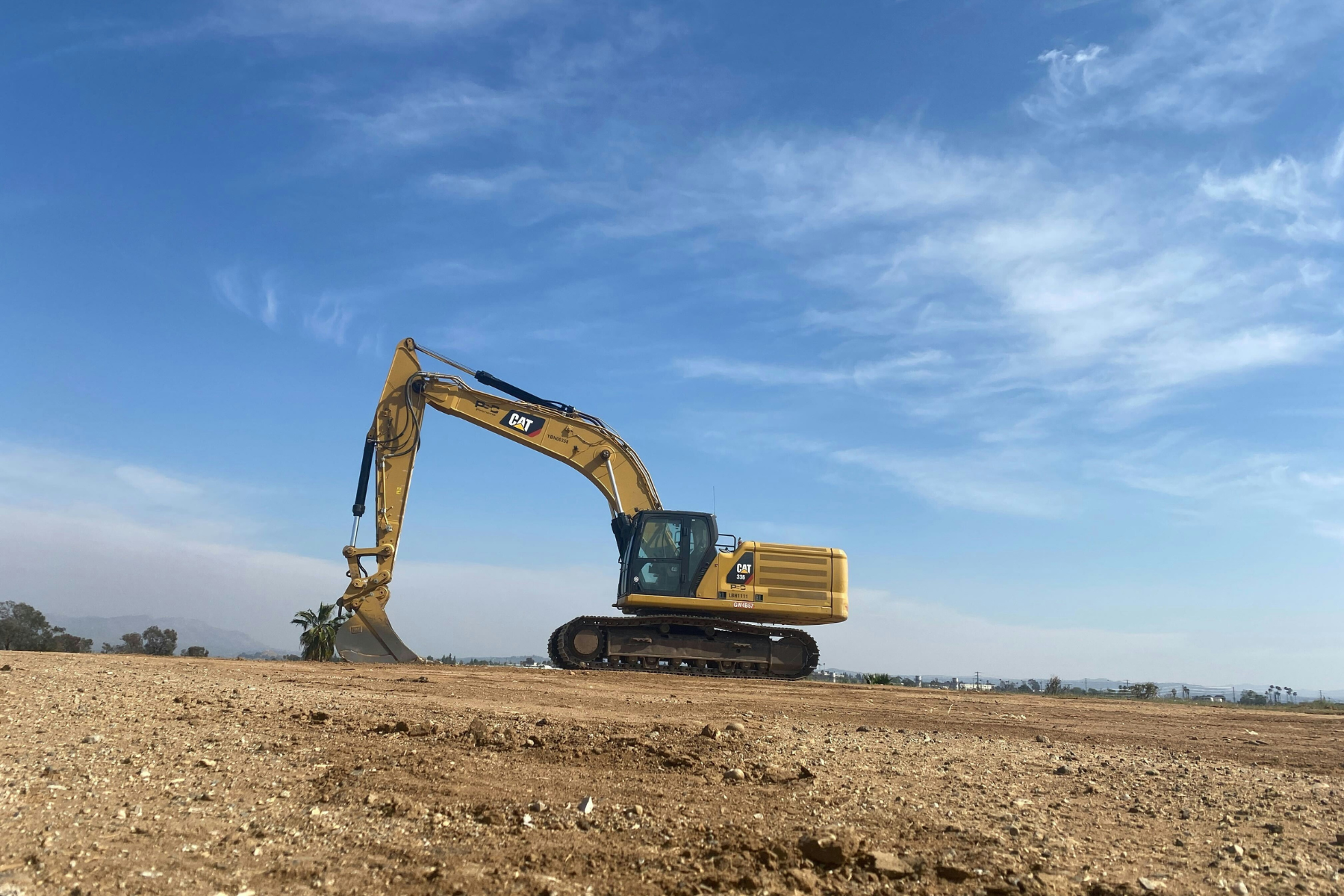

The growing complexity of critical infrastructure is driving a profound transformation in the way industrial and energy assets are managed. For decades, infrastructure maintenance was managed using corrective models: action was taken only when something failed. That model is no longer sustainable in a context where assets are more complex, the costs of failure are higher, and regulations require data-driven, lifecycle-based management.
Digitization isn't just a matter of tools. It's a matter of skills. And organizations that don't train their technical teams to adapt to this change are adopting technology they can't take full advantage of.
Table of Contents
ToggleWhat is infrastructure asset management?
Asset management is the set of coordinated activities that an organization carries out to derive value from its assets throughout their entire life cycle: from planning and acquisition to operation, maintenance, and decommissioning. In infrastructure, assets are the facilities, equipment, networks, and systems that make the service possible: a water distribution network, a wind farm, a high-voltage power line, or a highway.
Managing them effectively means maximizing their availability, minimizing maintenance costs, and planning for their replacement before the failure causes any operational or financial impact.
From Reactive Management to Predictive Management
Corrective Maintenance vs. Preventive Maintenance vs. Predictive Maintenance
Corrective maintenance is performed after an asset has already failed. It is the most expensive model because unplanned failures lead to emergency shutdowns, urgent repair costs, and—in the case of critical infrastructure—service disruptions. Preventive maintenance is carried out according to fixed schedules, regardless of the asset’s actual condition. It reduces unplanned downtime but results in unnecessary interventions. The predictive maintenance It takes action when data indicates that the asset is nearing failure: advances in sensors, industrial IoT, AI, and integrated platforms make it possible to move from isolated pilot projects to systems that are useful for day-to-day operations.
In infrastructures that manage tens or hundreds of thousands of distributed assets, even small improvements in maintenance planning can lead to significant reductions in both OPEX and CAPEX.
Key Technologies in Asset Digitization
BIM and Digital Twins
The BIM model of an infrastructure asset is not just a visual representation—it is a repository of technical data linked to each element of the asset. A digital twin goes one step further: it replicates the asset’s behavior in real time, incorporating sensor data and allowing for the simulation of scenarios before taking action. If you want to understand how BIM is applied in infrastructure project management, you can check out our article on training in infrastructure and key skills for the second semester.
IoT and Sensors in Infrastructure
IoT sensors enable the collection of real-time data on assets—such as temperature, vibrations, and energy consumption—and facilitate remote monitoring, reducing the need for physical inspections. In distributed infrastructure, this represents a radical shift: moving from periodic on-site inspections to continuous monitoring from a control center. The transition to electrified infrastructure is also driving this trend, as we explain in our article on Electric mobility in businesses.
AI Applied to Predictive Maintenance
By 2026, AI will make it possible to summarize an asset’s historical incidents, generate diagnostic hypotheses based on signals, recommend checks before taking action, and prioritize assets by criticality. Integrating AI with existing CMMS platforms is the step that most organizations are taking right now.
CMMS/GMAO Platforms
Computer-Aided Maintenance Management platforms centralize asset tracking, maintenance scheduling, maintenance history, and work order generation. They serve as the digital backbone of any asset management strategy and act as the integration point with IoT and analytics systems.
Regulations and Reference Standards
The ISO 55000 It is the international benchmark standard for asset management. It defines the principles, terminology, and requirements for an asset management system that complies with best practices. Companies that excel in asset management under ISO 55000 reduce reactive maintenance and report a 27% lower rate of recordable incidents. Implementing it does not require starting from scratch: it can be done in a scalable manner, by families of critical assets, progressing gradually from a basic level to formal certification.
What technical roles does an organization need to digitize its asset management?
The most in-demand profiles during this transition are the asset management specialist with knowledge of ISO 55000 and experience in CMMS; the specialist in BIM for infrastructure, able to build and maintain models based on operational data; the maintenance data analyst, which interprets the outputs of predictive systems and translates them into decisions; and the instrumentation and IoT technician, who installs, configures, and maintains the sensors and data acquisition systems.
In most cases, these roles aren’t filled by hiring from outside: they’re developed by training technicians who are already familiar with the infrastructure, updating their digital skills without losing the operational knowledge they’ve accumulated. If you’d like to see how to structure that process, check out our article on technology in industrial design.
How to Train Teams in Digital Asset Management
Training in digital asset management is not standardized: It depends on the organization's starting point and the role of each position. The maturity assessment helps identify the team's current level and which training will have the greatest immediate impact.