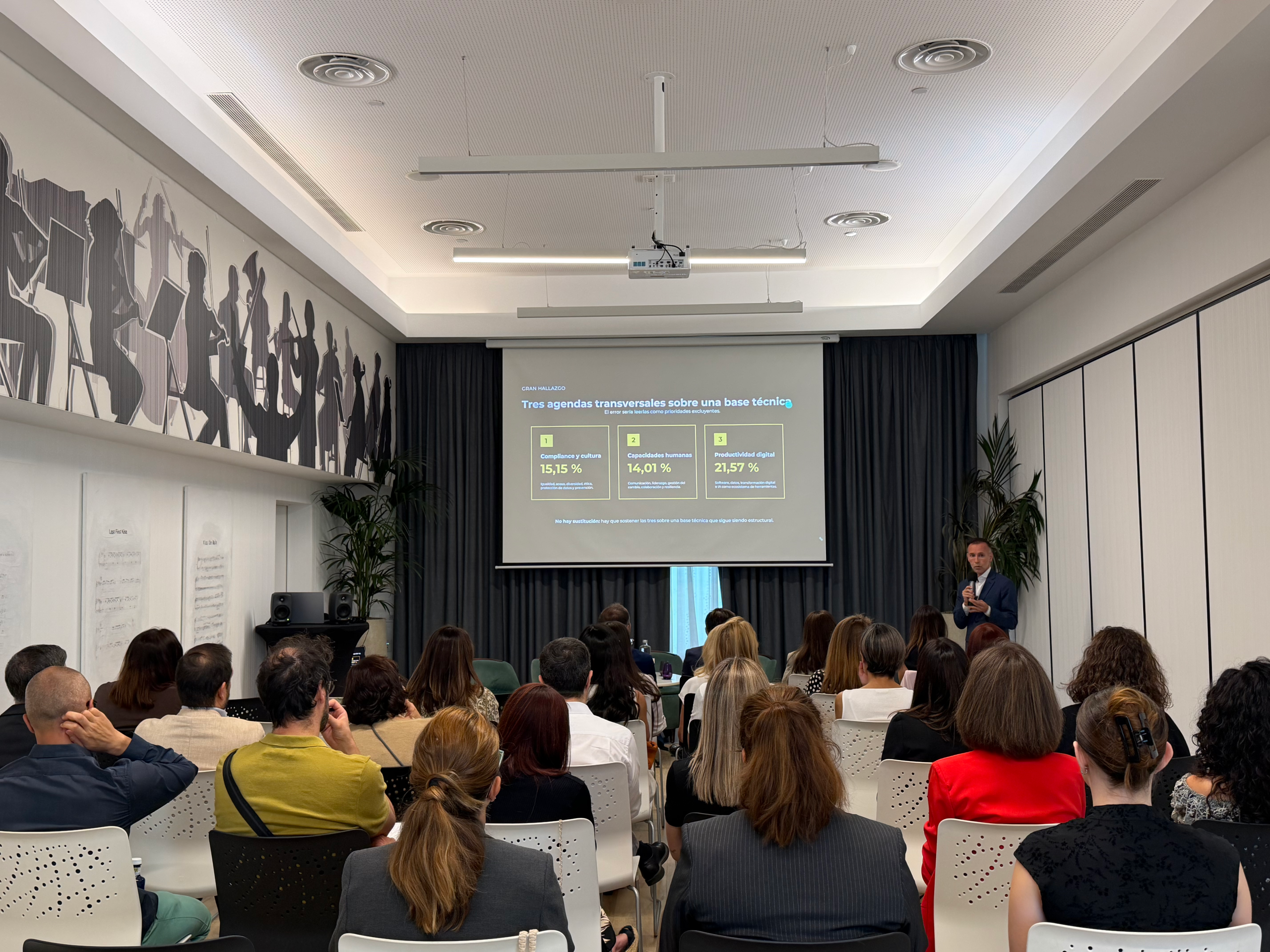

Educa PHAROS presented the second edition of its Barometer in Madrid, a study that analyzes how companies’ learning needs are evolving. The presentation brought together executives from Naturgy, Endesa, Redeia, and Structuralia to discuss the results with those who make day-to-day decisions regarding talent and training within their organizations.
Educa PHAROS has presented the Educa PHAROS 2026 Barometer, the second edition of a study designed to examine, using real data, how training needs are changing within companies.
The report analyzes more than 64,000 enrollments, nearly 3,000 courses, and 25 economic sectors and subsectors over a two-year period. This data set allows us to look beyond trends and understand what professionals are actually learning and how organizations are responding to an increasingly specialized job market.
The Barometer confirms, among other things, that companies need to address three major areas simultaneously: compliance and corporate culture, human capital, and digital productivity. Technical training also remains relevant, though it is now focused on increasingly specific needs.
The second edition thus consolidates the The Educa PHAROS Barometer as an exercise in analyzing corporate training, Designed to provide useful information to talent, training, and development leaders who need to anticipate what skills their organizations will require.
Table of Contents
ToggleFrom Data to Business Reality
The presentation of the Barometer included a key element: comparing its findings with the experiences of those who manage learning within large companies.
The roundtable discussion, moderated by Pablo Ybarra, Chief B2B Officer of EDUCA EDTECH Group, brought together José Luis Ausin, Head of Corporate University at Naturgy; Mar Valiente Pérez, Head of Learning at Redeia; Simón Acosta Nieto, Head of Talent Development at Endesa; and Raquel Robles Gil, Director of Educa PHAROS.
The four organizations come from different backgrounds, but the conversation revealed several points in common. José Luis Ausin spoke about “training fatigue” and the need to offer different ways of accessing the same knowledge. Mar Valiente emphasized another key factor: it is not enough to personalize training if it does not reach professionals when they actually need it.
Simón Acosta, for his part, addressed the balance between facilitating self-directed learning and providing the necessary guidance and tools to support it.
Pablo Ybarra summarized one of the main points of consensus from the day's proceedings: “The impact of training is no longer measured in hours; it’s measured in business.”.
When the challenge is no longer to take more courses
The discussion that took place during the presentation reinforces one of the key takeaways from this second edition. Organizations today have access to a vast amount of knowledge. The challenge lies in determining what training each professional needs, when, and for what purpose.
“The problem is no longer one of product availability; today, there are options for almost everything, and it’s a matter of personal preference.”, said Pablo Ybarra after the game.
That approach is also at the heart of Educa PHAROS. The B2B technology line stems from Structuralia’s experience and aims to transform specialized knowledge into talent development by incorporating technology, artificial intelligence, and metrics into corporate learning management.
With its second Barometer, Educa PHAROS builds on its own body of knowledge, which seeks to observe how companies learn, identify where their needs are shifting, and provide insights to help them make better decisions about training.