
Table of Contents
ToggleWhat is electrical hazard, and what effects can it cause?
The electrical hazard It is the possibility that an electric current may pass through the human body, potentially causing burns, muscle tetany, ventricular fibrillation, or death. Its effects depend on the intensity, frequency, path of the current, and duration of exposure. At 10 mA or higher, the current can prevent the person from releasing the conductor.
Types of electrical accidents: direct contact, indirect contact, and electric arc
A direct contact It occurs when a person touches a live part of the electrical system (a live conductor or terminal). A indirect contact occurs when touching a live part caused by an insulation failure. The electric arc It does not require physical contact: the ionization of the air generates a flash of extremely high temperature (up to 20,000 °C) with pressure waves and ultraviolet radiation that cause electric burns serious.
Royal Decree 614/2001: What It Requires of Companies
The RD 614/2001 The regulation on minimum requirements for the protection of workers' health and safety against electrical hazards is the standard of reference for electrical safety in the workplace in Spain. It requires companies to assess electrical hazards, establish safe work procedures, and ensure that only personnel authorized and qualified perform electrical work. The installations must also comply with the Low-Voltage Electrotechnical Regulations (REBT).
The Five Golden Rules for Stress-Free Work
Before working on any electrical installation, the following procedure must be followed: stress-free work (TST), which consists of five mandatory steps known as the "golden rules":
- Disconnect the installation of all power supplies.
- Block operating devices designed to prevent accidental reconnection.
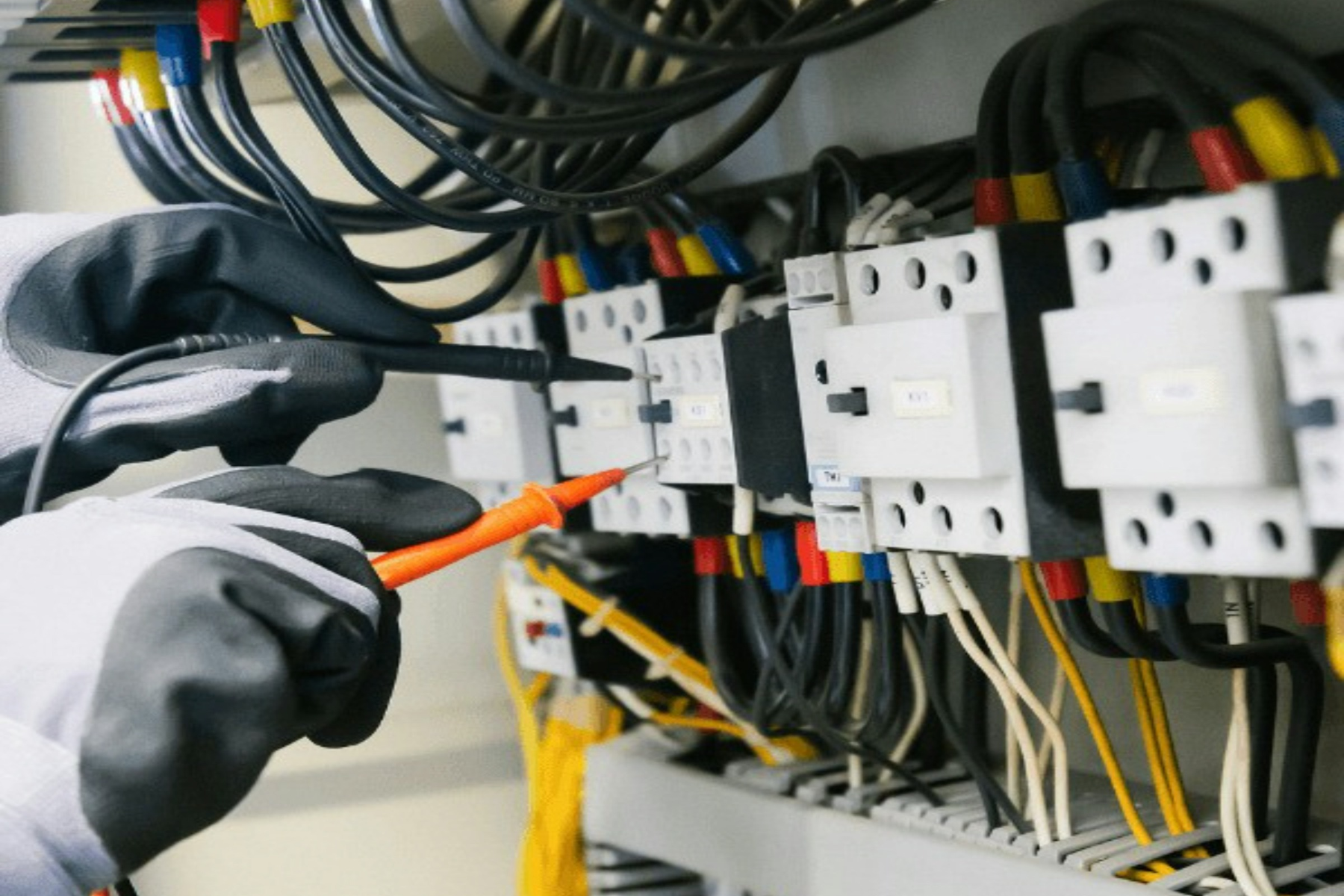
- Verify the absence of voltage with certified equipment at workstations.
- Ground and short-circuit Drivers at all access points to the work site.
- Signpost the work area and mark off the safety zone.
Live-line work and work in the vicinity of live lines: requirements
A live-line work (TAT) is one in which the worker comes into contact with or approaches live parts without disconnecting them. It requires personnel authorized worker (for low voltage) or skilled worker with specific certification (for high voltage), an approved work procedure, insulated tools, and supervision. The local jobs Work is performed near live parts without touching them: safety distances and the delineation of the hazard zone are required based on the rated voltage.
Protective and Signaling Equipment
The PPE for Electrical Hazards include: dielectric gloves (classified by operating voltage), insulated footwear, a hard hat with a face shield, a test pole, and protective clothing against electric arcs (classified by expected arc energy). The insulated hand tools must comply with the IEC 60900 standard. Signage in the work area is mandatory and includes beacons, "No Operation" signs, and lockout devices.
Electrical Hazards at Construction Sites and in Industrial Facilities: Common Cases
In the construction industry, the most common accidents involve contact with high-voltage overhead power lines while moving machinery and the use of portable power tools without double insulation or ground-fault protection. In industrial facilities, the risks are concentrated in open electrical panels, motor maintenance without interlocks, and work in areas classified as having an explosion hazard.
Required Training for Personnel Working with Electricity
Royal Decree 614/2001 distinguishes three levels: trained worker (may work on electrical installations under supervision), authorized worker (low voltage, with training and express authorization from the employer) and skilled worker (high voltage, with accredited certification and training). The training must be both theoretical and practical, up-to-date, and documented.
Educa PHAROS Training on Electrical Installations and Systems
- Electrical Installations in Office, Retail, and Industrial Buildings
- Electric Power Systems
- Master's Degree in Electrical Engineering
Frequently Asked Questions About Electrical Hazards
What blood pressure level is dangerous for a person?
Any voltage can be dangerous under unfavorable conditions, but for regulatory purposes, the RD 614/2001 consider it a safety margin 50 V AC y 120 V DC as values above which there is a risk of electrical contact. In damp or conductive environments, the thresholds are reduced to 25 V and 60 V, respectively.
Who is allowed to perform electrical work at a company?
It depends on the type of work. The non-stressful jobs Low-voltage work may be performed by personnel trained and authorized by the employer. The live-line work Low-voltage work requires an authorized worker with specific training. Work on high voltage They always require qualified workers with the appropriate certification, in accordance with Royal Decree 614/2001.