The DHW (Domestic Hot Water) expansion tanks They are a key component in hot water systems, especially in closed systems where pressure can increase due to the expansion of water as it heats up.
Proper installation and maintenance not only ensure that the system operates correctly, but also prevent breakdowns, leaks, or damage to equipment such as boilers and storage tanks. In this guide, we’ll go over how they work, when they’re necessary, and the key points for their installation and maintenance.
How Do Expansion Tanks Work?
The operation The operation of an expansion tank is based on absorb the expansion of water when it is heated. In a closed system, water cannot expand freely, which causes a rise in pressure that can damage the system.
The glass acts as a damping element: It has an internal chamber separated by a membrane that compensates for this expansion. This keeps the pressure within safe and stable limits.
What are the components of an expansion tank?
An expansion tank consists of several key elements which enable it to function properly. Inside, the flexible membrane stands out; it divides the tank into two sections: one for water and the other for air or pressurized gas.
It also features a charging valve to regulate internal pressure, a hydraulic connection to the system, and a metal housing that protects the assembly. All of these components work together to absorb volume fluctuations without affecting the rest of the system.
ACS Expansion Calculator
DHW Expansion Tank Calculator
Differences between an ACS expansion tank and one designed for heating systems
Although they work in a similar way, there are significant differences between an expansion tank for hot water and one designed for heating systems.
The DHW expansion tank is specifically designed to work with drinking water, so its materials must meet health and safety requirements and be resistant to high temperatures. In contrast, heating tanks operate in closed circuits where the water is not intended for consumption.
In addition, Pressure and temperature conditions tend to vary, which influences the sizing and technical characteristics of each type of tank.
When is it necessary to install an expansion tank?
Installing a DHW expansion tank is necessary primarily in closed systems where there is no possibility for the expanding water to escape naturally.
This occurs, for example, in systems with check valves or pressure-controlled systems, where an increase in water volume can cause overpressure. In these cases, the expansion tank prevents damage to pipes, valves, and equipment.
Installation of the DHW Expansion Tank
The proper installation of the expansion tank is essential to ensuring its effectiveness. It must be properly integrated into the system, taking into account the working pressure and operating conditions.
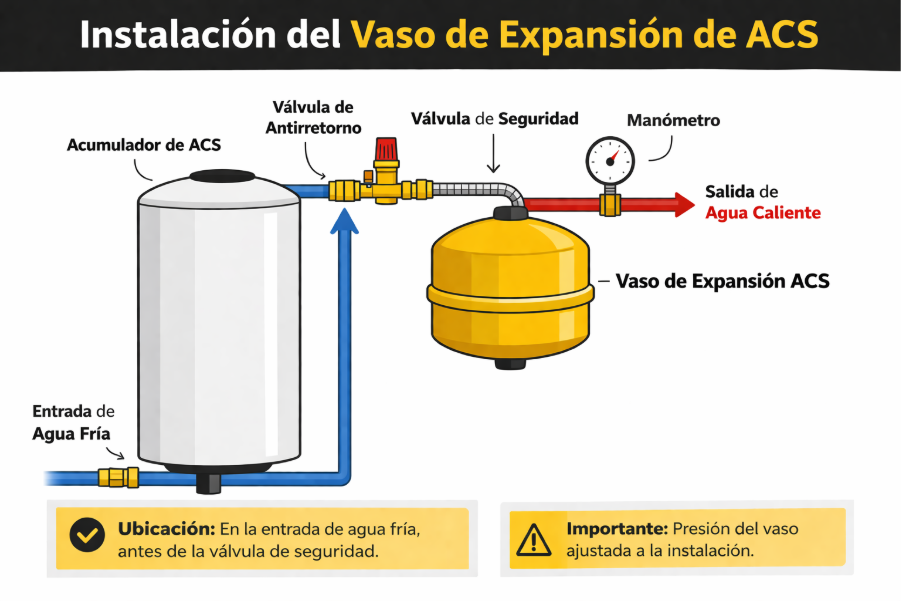
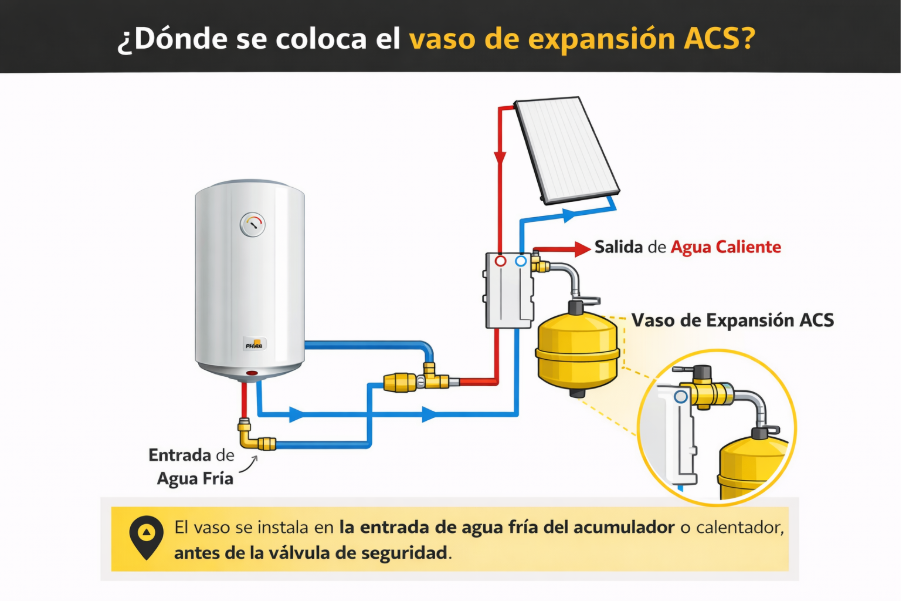
Where is the DHW expansion tank installed?
The DHW expansion tank must be installed at the cold water inlet of the storage tank or water heater, usually upstream of the safety valve. This location allows for the effective absorption of water expansion before it affects the rest of the system.
In addition, it is recommended to place it in a accessible area to facilitate maintenance and periodic inspections.
How should a DHW expansion tank be maintained?
Maintenance of the expansion tank is relatively simple, but essential to ensure its proper functioning over time.
It's important check periodically the air pressure inside it, like this such as the condition of the membrane. If it deteriorates, the vessel loses its absorption capacity and may cause the system to malfunction.
Also It's a good idea to review possible leaks, corrosion, or wear on the connections, especially in high-use installations.