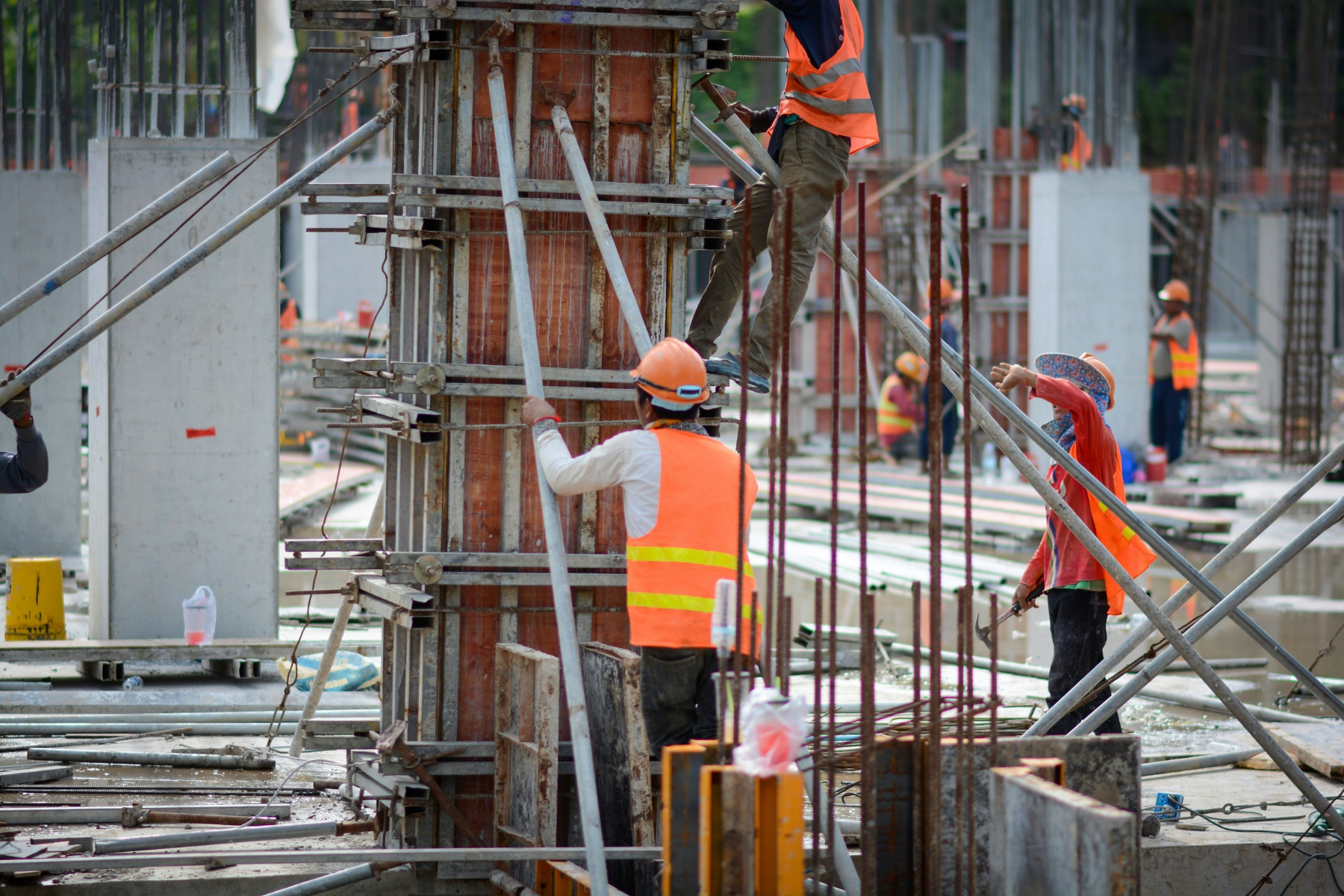

In the construction industry, most serious accidents do not occur because of a lack of preventive measures. They occur because No one checks to see if those measures are being implemented at the critical moment. That is why the preventive safety officer exists: a legal role whose presence on the job site ensures that safety measures are not just on paper.
Table of Contents
ToggleWhat is a preventive appeal?
A preventive appeal is one or more individuals designated by the company whose role is to monitor compliance with preventive measures in situations that call for it. This person is neither an external inspector nor a safety technician: he or she is someone with sufficient expertise, the necessary resources, and a physical presence at the site where the high-risk activity is taking place. The regulations governing this role are set forth in the Article 32-bis of Law 31/1995 on Occupational Safety and Health, introduced by Law 54/2003.
When is the presence of the preventive measure required?
Article 32-bis of the Law 31/1995 It establishes three circumstances in which the filing of a preventive appeal is mandatory.
| Assumption | Construction Site Status | Common examples | Who appoints |
|---|---|---|---|
| ARisks Exacerbated by Concurrent Factors | When the concurrence of activities, processes, or workers from different companies significantly increases the risk. Art. 32 bis of the LPRL · Royal Decree 1627/1997 |
Simultaneous work by different subcontractors in the same construction zone; structural assembly while nearby foundations are being poured. | Prime contractor |
| BHazardous activities or processes | When activities or processes are carried out that are considered hazardous or involve special risks as outlined in the Health and Safety Plan. Annex II of Royal Decree 1627/1997 |
Work at heights, excavation, demolition, use of explosives, work in confined spaces, risk of being buried or of collapse. | Contractor or subcontractor performing the work |
| CNotice from the Labor Inspectorate | When the Labor and Social Security Inspectorate requires it due to working conditions identified during an inspection visit. | Any situation on a construction site where the inspector determines that ongoing supervision is necessary to ensure the proper implementation of work procedures. | Company to which the request is addressed |
Risks exacerbated by overlapping activities
On construction sites, it is common for different contractors to work in the same area at the same time: one on scaffolding while another works on the ground, or several crews on different floors of the same building. When this overlap makes it necessary to ensure that everyone is following the work procedures correctly, Each contractor is required to have a preventive measure in place. In construction projects, the Fourteenth Additional Provision of Law 31/1995 further specifies that this requirement applies specifically when work is being carried out jobs involving special hazards as defined in Royal Decree 1627/1997.
Hazardous Activities or Activities Involving Special Risks
Article 22-bis of the Prevention Services Regulation (RD 39/1997) specifies what is meant by hazardous activities: work at heights involving a serious risk of falling, entering confined spaces, work involving exposure to particularly hazardous chemical or biological agents, work in the vicinity of high-voltage power lines, underwater work, the use of explosives, the assembly and disassembly of heavy prefabricated elements, and demolition work involving a risk of collapse.
When required by the Labor Inspectorate
The Labor Inspectorate may require the presence of a labor representative if, during an inspection, it identifies working conditions that make such a representative necessary. This requirement must be complied with immediately.
Functions of the preventive remedy
The functions of the preventive remedy are to monitoring and control, enforcement. Specifically: ensuring that established preventive measures are implemented, verifying that workers follow safe work procedures, identifying unforeseen risk situations and reporting them to the person in charge, and, in the event of a serious and imminent risk, warning the affected workers. The preventive remedy It cannot bring the work to a standstill on its own: If you detect a violation that the employee does not correct, you must report it to the employer, who does have the authority to address it.
Who Can Be a Preventive Resource? Requirements and Minimum Training
According to Article 32-bis of the LPRL, an employer may designate as a preventive resource: one or more designated workers of the company, one or more members of the company's own safety department, or one or more members of an external safety service agreed upon.
As for training, the law requires that they have sufficient capacity and the necessary resources. In practice, and especially in the construction industry, the recognized minimum level is the Basic-Level Occupational Safety and Health Training 60 hours (according to the VII General Collective Bargaining Agreement for the Construction Sector). Some sector-specific collective bargaining agreements may establish additional requirements.
Preventive Measures on a Construction Site: Differences with the Safety Coordinator and the Site Manager
The three concepts are complementary and can appear together in the same work. One key difference: The safety coordinator can halt work; The preventive appeal does not have that direct authority. For more details on the health and safety coordinator for construction sites, please see our Article on Royal Decree 1627/1997 and the coordination of business activities on construction sites.
Common Mistakes When Filing a Preventive Appeal
The most common ones on construction sites are: to appoint someone who does not have the minimum required training under the applicable collective bargaining agreement; failing to document the appointment in writing or communicate it to the affected employees; assign incompatible roles given the continuous presence required by the position (the preventive resource must remain at the workplace for the duration of the situation that led to their assignment); and to confuse his role with that of the security coordinator, which leads to it not being designated when it is legally required.
How to Train Your Team to Serve as a Preventive Resource
Serving as a safety officer on a construction site requires knowledge of the applicable regulations, the ability to identify situations that trigger mandatory action, an understanding of monitoring and communication protocols, and the judgment to act in the face of unforeseen situations. Educa PHAROS offers specific training for this purpose:
- Occupational Safety and Health in Construction
- ISO 45001: Occupational Health and Safety Management Systems
Frequently Asked Questions About the Preventive Appeal
Can the employee himself or herself file a preventive appeal?
Yes. The law allows any employee of the company to be designated as a safety officer, provided they have sufficient qualifications (minimum required training), the necessary resources, and the availability to be present at the workplace for the duration of the situation that led to their designation. They do not need to be a certified safety technician.
How many preventive measures are needed on a construction site?
The law does not specify a minimum number. There must be sufficient in number to monitor compliance with preventive measures. If several contractors are on-site carrying out simultaneous high-risk activities, each must designate its own safety officer. On job sites with multiple active work fronts at the same time, the presence of more than one safety officer may be necessary.
Is a "preventive measure" the same thing as a "prevention specialist"?
No. The prevention specialist is a professional with specific certification (intermediate or advanced level) who is part of the company’s prevention system and performs evaluation, planning, and advisory functions. The prevention resource is a role of active surveillance at the time of risk, not a planning role. A safety technician may be designated as a safety officer, but not every safety officer is a safety technician.