The cloud computing has become a an essential tool for businesses of all sizes. The cloud allows you to store, process, and manage data remotely, eliminating the need for its own physical infrastructure, facilitating scalability and optimizing costs. Furthermore, by 2026, cloud services will offer more advanced, secure, and adaptable solutions tailored to the needs of companies that manage multi-cloud services or large volumes of data.
What is cloud computing?
Cloud computing consists of provide storage, processing, and software services via the Internet. This means that companies do not need on-premises servers or complex infrastructure, and can access on-demand computing resources, paying only for what they use.
Benefits of Using Cloud Services
| Advantage | Description |
|---|---|
| Scalability | Quick adjustment of resources based on business needs. |
| Cost Reduction | Lower investment in infrastructure and maintenance. |
| Accessibility | Access data and applications from anywhere with an Internet connection. |
| Security | Automatic backup, data encryption, and regulatory compliance. |
| Collaboration | It facilitates real-time teamwork and project management. |
| Innovation | It allows you to try out new apps and services without significant financial risk. |
Types of Cloud Computing
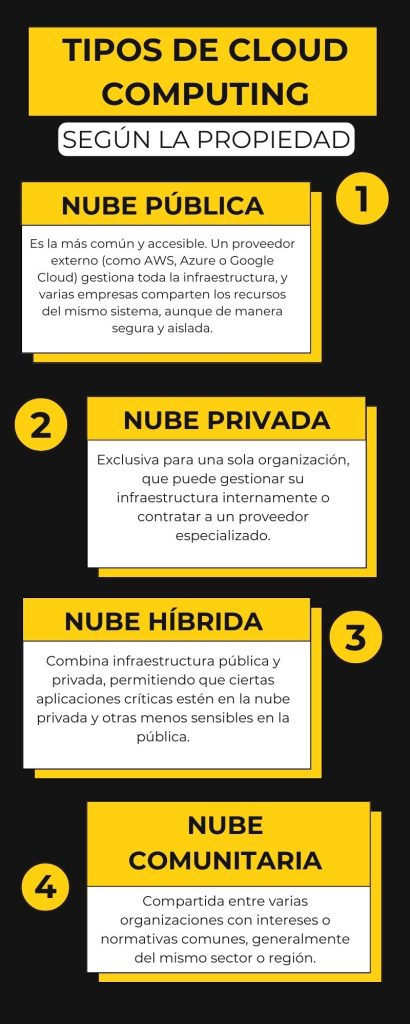
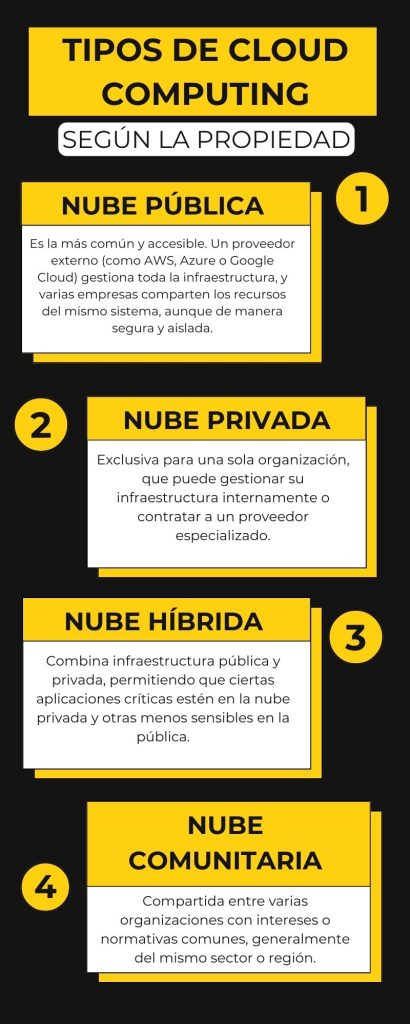
There are different ways to classify cloud services, depending on ownership or the type of service they offer.
According to the property
According to the service
The Leading Cloud Computing Providers of 2026
The market for Cloud Computing in 2026 It continues to be dominated by major international providers, along with regional and specialized players that meet very specific business needs. The following is a summary of the Major cloud service providers and their features.
| Supplier | Features | Key strength |
|---|---|---|
| Azure | Microsoft Platform, Integration with Office 365, and Enterprise Solutions | Integration with the Microsoft ecosystem |
| Amazon Web Services | A wide range of IaaS, PaaS, and SaaS offerings, scalable globally | Scalability and Range of Services |
| Google Cloud | Data, Analytics, and Machine Learning Services | Advanced Artificial Intelligence Capabilities |
| Alibaba Cloud | Strong presence in Asia, e-commerce solutions | Robust e-commerce infrastructure |
| IBM | Hybrid Cloud, AI, and Blockchain Solutions | Integration of Artificial Intelligence and Blockchain |
| Salesforce | SaaS for CRM and Customer Management | Customer Relationship Management and Automation |
| Oracle | Databases and Business Applications | Cloud Database Solutions |
| Weppa Cloud | Regional supplier focused on small and medium-sized businesses | Personalized service and local support |
| Hostinger | Hosting and Cloud Services for Small Businesses | Affordable price and ease of use |
| DreamHost | Hosting and Cloud Services for Developers | Flexibility and Technical Support |
| Samsung Cloud | Cloud Storage for Samsung Devices | Integration with Samsung Devices |
| Movistar Cloud | Storage and Backup Solutions for Spanish Customers | Reliability and Local Support |
| Axis Cloud | Cloud Services for Businesses and Security | Security and Specialized Services |
In 2026, companies that offer cloud computing services focus on not just in storing data, but also in offering multi-cloud management, advanced security tools, and solutions tailored to different industries. Choosing a Choosing the right supplier depends on several factors such as company size, scalability needs, type of service required, and regional support.
Cloud computing continues to be key to driving digital transformation, optimizing processes, and providing companies with the flexibility and innovation they need to compete in an increasingly digital environment.